
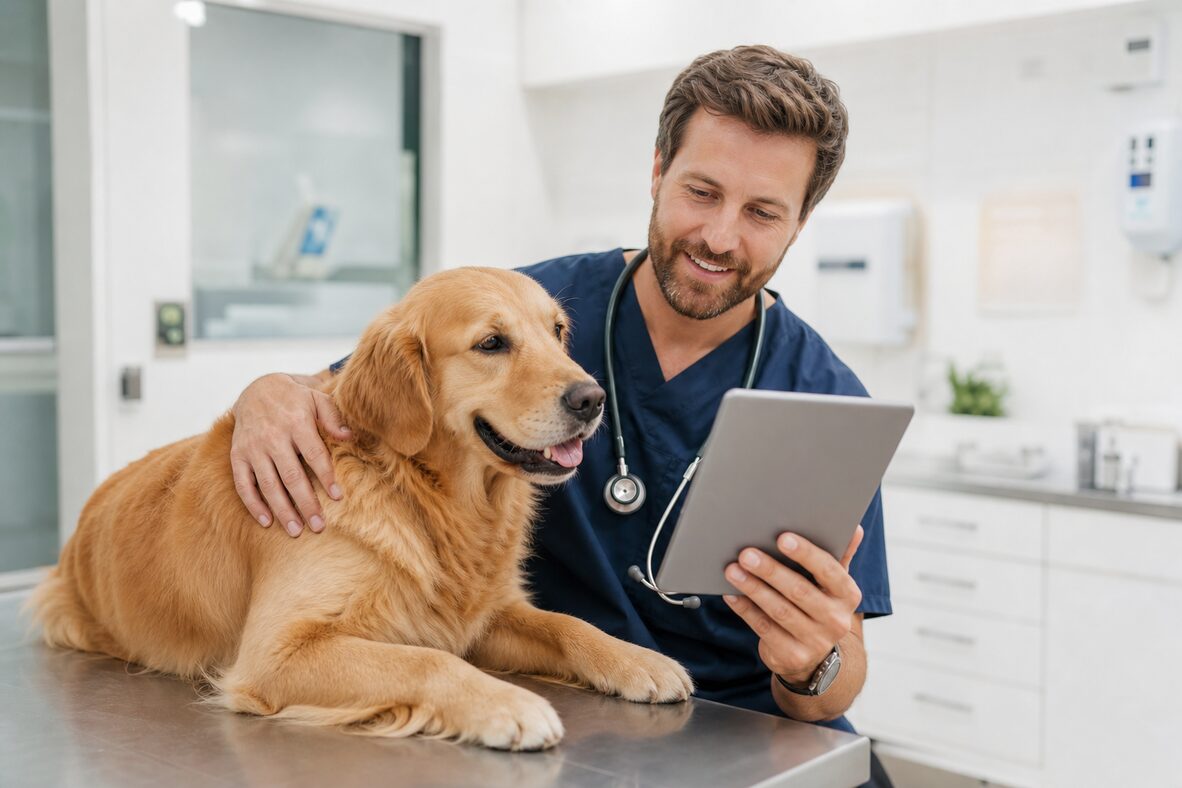
AI in veterinary medicine — the 2026 revolution saving lives
Five ways AI transforms your practice: diagnostics, predictive care, documentation, dermatology, and triage — plus how PetsManager integrates AI.
Artificial intelligence already diagnoses cancer in dogs more accurately than many experienced veterinarians. Algorithms predict diabetes in cats months before symptoms appear. Systems analyse X-rays in seconds.
This is not science fiction. It is happening now — and it is changing veterinary medicine forever.
How is AI entering veterinary medicine?
Over the past three years, artificial intelligence has moved from research labs into real clinics. Veterinary practices worldwide — including in Bulgaria — are starting to integrate AI tools into daily work.
The results are impressive.
5 ways AI is transforming veterinary practice
1. AI diagnostics — faster and more accurate
Traditional diagnosis relies on the veterinarian's experience, lab tests, and imaging. With rare diseases or atypical symptoms, even experienced specialists can miss the mark.
AI systems are trained on millions of cases. They recognise patterns the human eye overlooks.
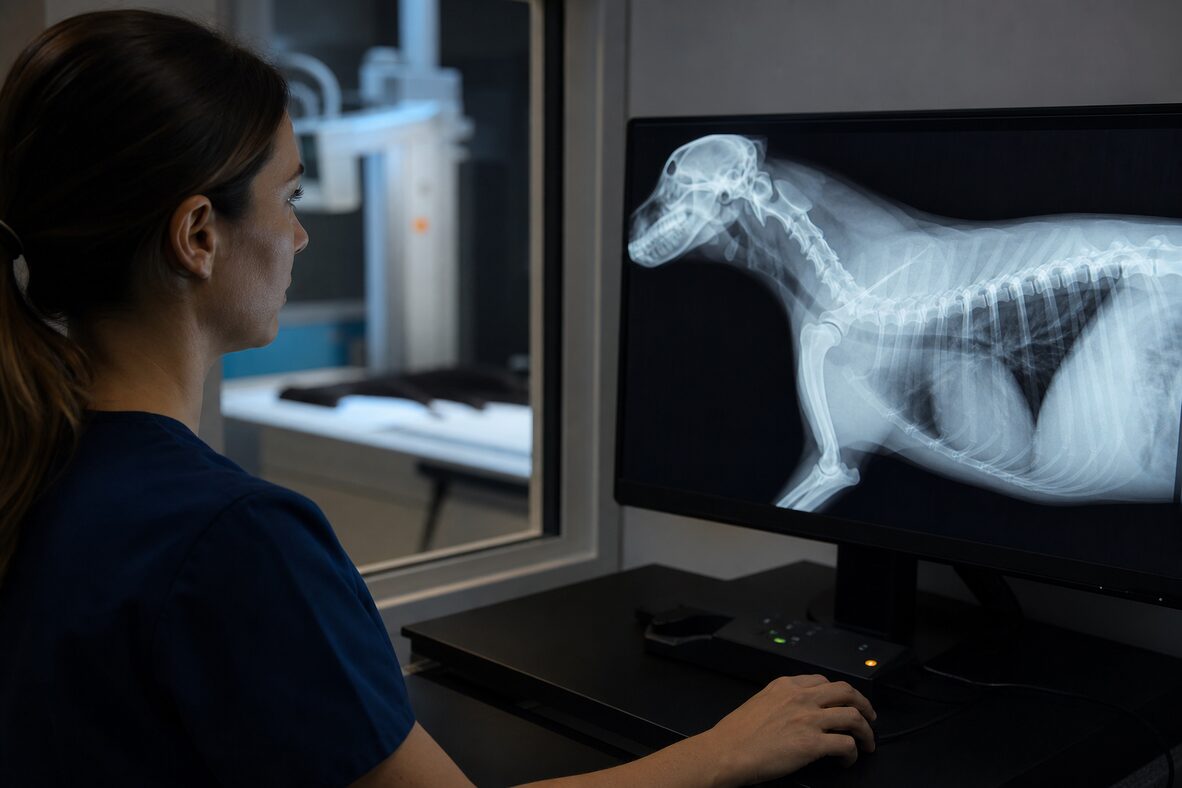
Real example: Vetology AI analyses radiographs and detects pathology with over 95% accuracy — including early-stage cancer, joint issues, and lung disease.
For the clinic: Faster diagnosis, fewer missed cases, happier clients.
2. Predictive medicine — treatment before illness
The best veterinary care prevents disease before it appears.
AI systems analyse an animal's health data over time and identify risk factors:
- Weight changes
- Shifts in eating habits
- Changes in activity
- Breed-related genetic predispositions
2024 study: An AI algorithm predicted type 2 diabetes in cats with 89% accuracy — on average 8 months before clinical symptoms. Early treatment is far more effective and less costly.
3. AI assistant for prescriptions and documentation
Veterinarians spend a huge share of their time on documentation — filling records, writing prescriptions, preparing regulatory logs.
AI assistants listen to the consultation and automatically:
- Generate structured medical records
- Suggest prescriptions based on symptoms and history
- Complete regulatory documents
- Check for drug interactions
The result: Veterinarians save 2–3 hours of admin work per day. Those hours go back to patients.
4. Dermatological AI diagnostics
Skin conditions in companion animals are among the most common reasons for a vet visit — and among the hardest to diagnose, with hundreds of causes behind similar symptoms.
AI systems trained on millions of images of skin problems can:
- Distinguish allergic reactions from infections
- Identify specific fungi or parasites
- Suggest a differential diagnosis
The vet takes a photo on their phone; AI returns a preliminary assessment in seconds.
5. Telemedicine with AI triage
Not every call from a worried owner needs an urgent visit. But how do you tell what is truly urgent?
AI triage systems analyse described symptoms and:
- Assess urgency (can wait / should come soon / emergency now)
- Give home-care advice for mild cases
- Direct clients straight to emergency care for critical signs
For the clinic: Better workload balance. Fewer unnecessary visits, more focus on genuinely urgent cases.
Fears about AI in medicine — an honest answer
"Will AI replace veterinarians?"
No. Here is why:
AI is excellent at recognising patterns in data. Veterinary medicine requires much more — physical examination, clinical judgement, communication with anxious owners, surgical skills.
AI is a tool, not a replacement. An experienced vet with AI is far more effective than a vet without it.
"Are my patients' data safe?"
A legitimate question. Good systems use encryption, GDPR compliance, and clear data policies. When choosing a platform, this should be a key criterion.
"Is it too complex to implement?"
Modern AI tools are designed for ease of use. If you can use a smartphone, you can use them.
What does this mean for veterinary clinics in Bulgaria?
Bulgaria is at the start of this transformation. Most clinics still use paper files or basic digital systems without AI.
That is both a challenge and a major opportunity.
Clinics that integrate AI tools now will have a significant competitive edge over the next 3–5 years:
- More accurate diagnosis = happier clients
- Less admin work = more patients
- Better documentation = lower legal risk
- Smarter reminders = more repeat visits
PetsManager and AI
At PetsManager we integrate AI features directly into our veterinary clinic management platform.
AI assistant for prescriptions and regulatory logs is available on the Clinic plan — it automates documentation and saves hours every week.
This is only the beginning. We are working on integrating AI diagnostic tools directly into the platform.
👉 Explore PetsManager and AI features
Conclusion
AI in veterinary medicine is not a question of "if" — but "when". The transformation is already underway.
Animals receive better care. Veterinarians work more efficiently. Owners are more satisfied.
The only question is: will your clinic be among the first to adapt, or among the last?
PetsManager — modern cloud veterinary clinic management with AI features. Book a demo →
PetsManager
Ready to digitize your clinic?
Book a free demo and see the platform in action.